Best Studio Monitors for Vinyl: Stop Skipping Now
By Priya Nandakumar • 11th Feb
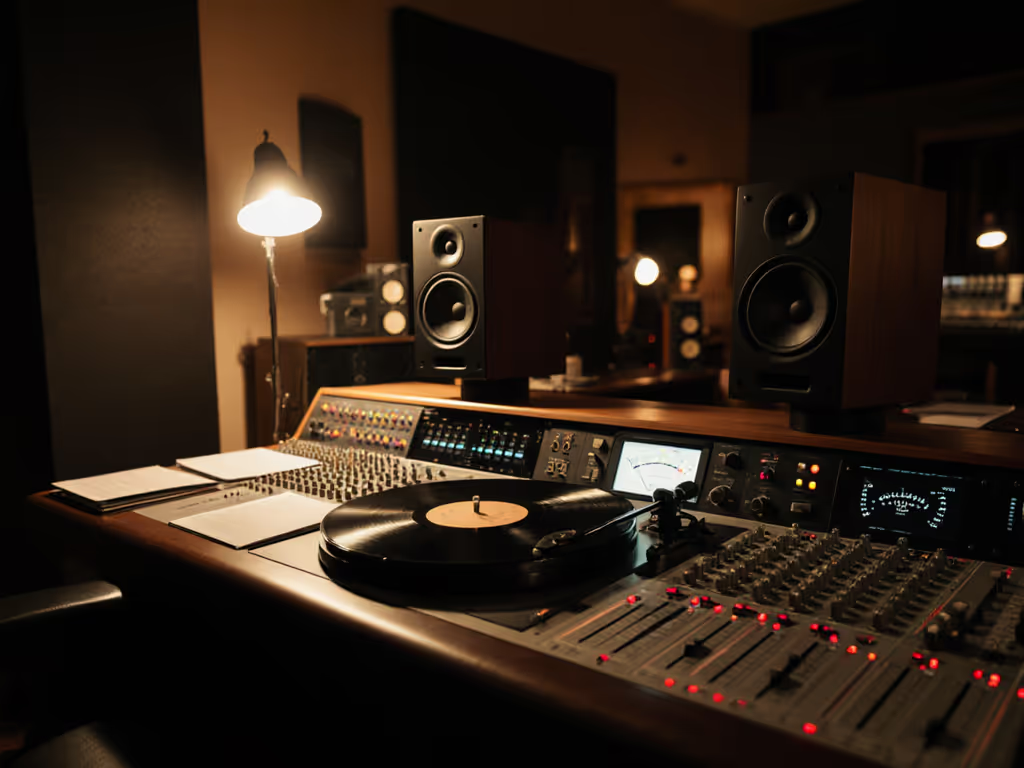
When you're preparing mixes for analog format monitoring, finding the best studio monitors isn't just about accuracy (it's about avoiding expensive vinyl skips, inner groove distortion, and mastering revisions that eat your profits). Most reviews focus on digital streaming translation, but vinyl has unique constraints that demand specific monitoring considerations. If you're unsure how to read those specs, see our frequency response guide. Having worked with indie labels that pressed records based on my mixes, I've seen how a $500 pair of honest monitors prevents costly mastering revisions far better than expensive ones that lie about low-end behavior.
Spend once, translate forever, save the budget for microphones.
Why Your Current Setup Fails Vinyl Cuts
Most bedroom producers use monitors fine for digital but disastrous for vinyl preparation. Vinyl has hard physical limitations:
- Upper bass buildup (60-100Hz) that causes skipping if unchecked
- Stereo width limitations above 10kHz that create distortion in tight grooves
- No subsonic frequencies (<20Hz) that would damage cutting heads
- Inner groove distortion that affects high-frequency content on long sides
Standard "flat" monitors often lie about these critical areas. I learned this after a client's record skipped three times per side, and my supposedly neutral monitors didn't reveal the low-end buildup that destroyed the cutting lacquer. That's when I started rating every speaker by translation per dollar.
In my tiny apartment studio, I discovered that focusing on monitors that revealed vinyl-specific problems actually saved me from constant revisions. When I switched to a pair of used Yamaha HS5s with basic isolation pads and a subwoofer I could mute for high-frequency checks, my mixes stopped failing cutting tests. That's the real ROI: not how good something sounds in your room, but how few revisions it demands.
Top 5 Studio Monitors for Vinyl Preparation (Ranked by Translation per Dollar)
1. Yamaha HS7
The HS7 hits the sweet spot for vinyl preparation: enough low-end extension (43Hz) to hear problematic upper bass buildup without hyping frequencies that would skip on pressings. Their famously "unspectacular" sound is actually perfect for record cutting preparation, no ear fatigue during long sessions, and minimal distortion at lower volumes (critical when checking for inner groove issues).
Why it works for vinyl:
- Consistent frequency response without the bass boost many monitors apply below 100Hz
- Detailed enough to hear stereo width problems that would distort in tight grooves
- Solid metal grilles you can safely remove for better high-frequency accuracy
- Used-market reliability: easily find well-maintained pairs for $300-$400 with 3+ years of warranty left
Budget math: $600 new (or $350 used) prevents $300+ vinyl revisions. At 50 pressings, that's $6 per pressing saved. Translation per dollar wins here.
2. Adam Audio A7V
The A7V's AMT ribbon tweeter gives you the extended high-frequency detail needed for mastering for physical media. Vinyl's high-frequency limitations become painfully obvious on these, you'll catch problematic sibilance and stereo width issues before they ruin your cutting master.
Why it works for vinyl:
- X-ART tweeter reveals high-frequency spatial issues that become distortion in tight grooves
- Solid low-end clarity down to 42Hz without excessive port resonance
- Front-panel controls let you quickly engage high-pass filter for high-frequency checks
- Less ear fatigue during long sessions compared to dome tweeters
Used-market caution: Adam's amplifiers occasionally fail. Stick to units under 3 years old with warranty transfer documentation. Budget $550-$650 for a reliable pair.
3. Focal Alpha 65 Evo
If you've read the Yamaha vs. Adam comparisons, you might wonder why I'm recommending Focal here. Simple: for vinyl, you need to hear both sides of the frequency spectrum accurately. The Alpha 65's 6.5" woofer delivers cleaner low-mids than smaller monitors, critical for detecting problematic 100-200Hz buildup that causes skipping.
Why it works for vinyl:
- Tighter low-midrange reproduction avoids the "muddy" sound common in budget monitors
- Built-in room correction helps compensate for nearfield desk placement issues
- Flat response within vinyl's practical frequency range (20Hz-15kHz)
- Excellent imaging for detecting stereo width problems
Warranty note: Focal's 5-year warranty covers drivers and electronics (rare at this price point). Grab used pairs with at least 2 years left.
4. KRK Rokit RP5 G5
Don't dismiss KRK because of the "hi-fi" reputation. The G5 series has a serious high-pass filter (35Hz-150Hz) perfect for simulating vinyl's low-end limitations. I've used these for record cutting preparation when budget was tight, just engage the high-pass at 35Hz to hear how your mix will behave on the physical medium.
Why it works for vinyl:
- Precise high-pass filter mimics vinyl's low-frequency limitations
- 85W total power handles low-volume critical listening without distortion
- Front port design minimizes boundary interference on small desks
Budget math: $450 new (or $250 used) gives you targeted monitoring for vinyl's frequency constraints. The high-pass filter alone makes this worth considering. To reduce small desk reflections and boundary effects, use our ideal monitor height guide.
5. Neumann KH 80 DSP
For serious vinyl producers on a budget, these are the dark horse. The built-in room correction identifies problem frequencies that would cause skipping or distortion on pressings. Set the target curve to mimic RIAA's high-frequency roll-off, and you'll hear exactly where your high-end will break down. For advanced tuning of built-in EQ and filters, see our studio monitor DSP guide.
Why it works for vinyl:
- DSP target curves can simulate vinyl's frequency limitations
- Exceptional low-level detail at safe listening volumes (critical for long sessions)
- Compact size fits tight desktop setups
Reliability anecdote: A client's KH 80 DSPs survived three studio moves over five years without a single repair. That's the durability you need when money's tight.
Practical Analog Monitoring Techniques for Vinyl Preparation
Once you've chosen your monitors, implement these analog monitoring techniques to avoid vinyl-specific issues:
1. The Mute-Test for Problematic Frequencies
- Solo your kick drum and bass
- Gradually mute frequencies below 35Hz while monitoring at low volume
- If the low-end feels weak, you've got problematic subsonic content that will damage cutting heads
2. Stereo Width Check
- Use a correlation meter alongside your monitors
- Anything above +5dB correlation above 10kHz will likely distort in tight grooves
- Adam Audio's wide sweet spot helps spot these issues before they're cut
3. Inner Groove Simulation
- Lower your volume to 70dB SPL (like late-side vinyl playback)
- Listen specifically to high-frequency content
- If cymbals/sibilance become distorted, you'll have inner groove issues
The Real Cost of Cheap Monitoring for Vinyl
Let's talk budget math. An indie pressing run of 300 units costs around $1,200. One revision adds $300-$500. If your monitors cause two revisions? That's 25-40% of your pressing budget gone.
Meanwhile, a $600 used monitor setup that prevents revisions:
- Saves $600-$1,000 per project
- Pays for itself in 1-2 projects
- Reduces time-to-shipment (critical for tight release schedules)
Translation per dollar isn't just a phrase, it's how I evaluate every piece of gear. After freelancing between tight apartments, I learned the cheapest choice is the one that avoids revisions. That $400 pair with decent isolation and a used sub beat fancy loaners when my mixes stopped falling apart on clients' turntables.
Actionable Next Step: Your Vinyl Monitoring Checklist
Don't wait for your first skipped record to fix your monitoring. Tomorrow:
-
Test your current setup with a high-pass filter at 35Hz, does your low-end still hold up? If not, you're risking vinyl skips.
-
Listen at 75dB SPL for 20 minutes, can you hear subtle high-frequency issues without fatigue? If not, you'll miss inner groove distortion. Learn how to monitor at safe listening levels without sacrificing accuracy.
-
Check stereo correlation above 10kHz - if it's consistently positive, you'll have cutting issues.
If you fail any test, prioritize monitors that reveal these specific problems, not just "sound good." Your first test pressing will thank you, and your wallet will stay fuller. Remember: translation per dollar beats flashy specs every time when preparing for physical media.
The best monitors for vinyl aren't the most expensive, they're the ones that prevent you from wasting money on avoidable revisions. Invest where it matters, and keep your budget for those ribbon mics that'll actually improve your sound.
Related Articles