Trusted Mobile Translation Studio Monitors
By Jae Min Park • 12th Nov
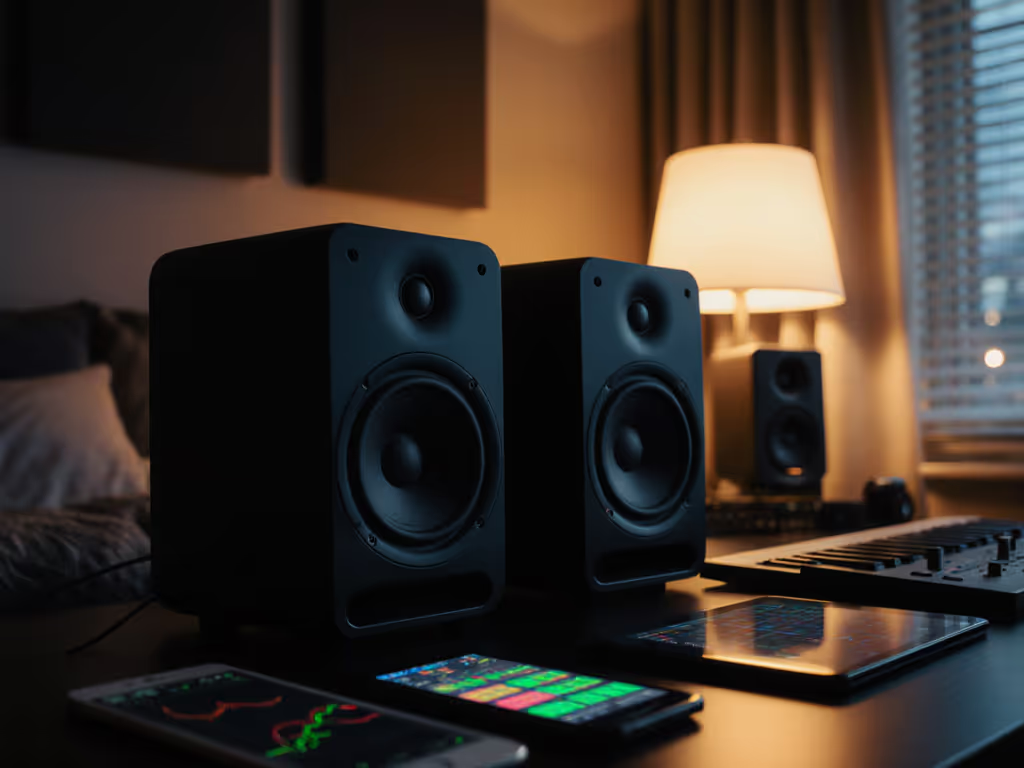
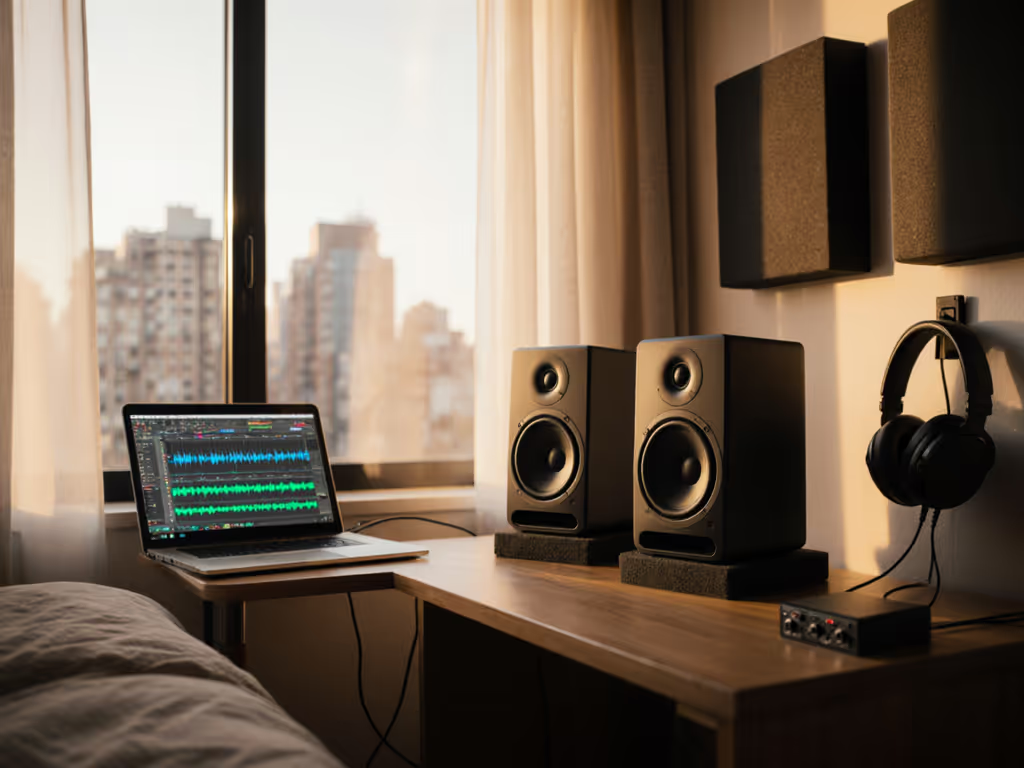
If you've ever finished a mix that sounded perfect in your room, only to have it fall apart on your phone, you're not alone. The reality is simple: powered studio monitors designed for proper phone translation monitoring are non-negotiable for today's creators. With 80% of music consumption happening on smartphones and social media platforms, your mixes must translate reliably to small speakers and earbuds, not just sound impressive in your room. In this guide, I'll cut through the noise with practical solutions for the bedroom producer who needs confidence that their work will hold up everywhere, especially on mobile devices.
Why Your Current Setup Might Be Lying to You
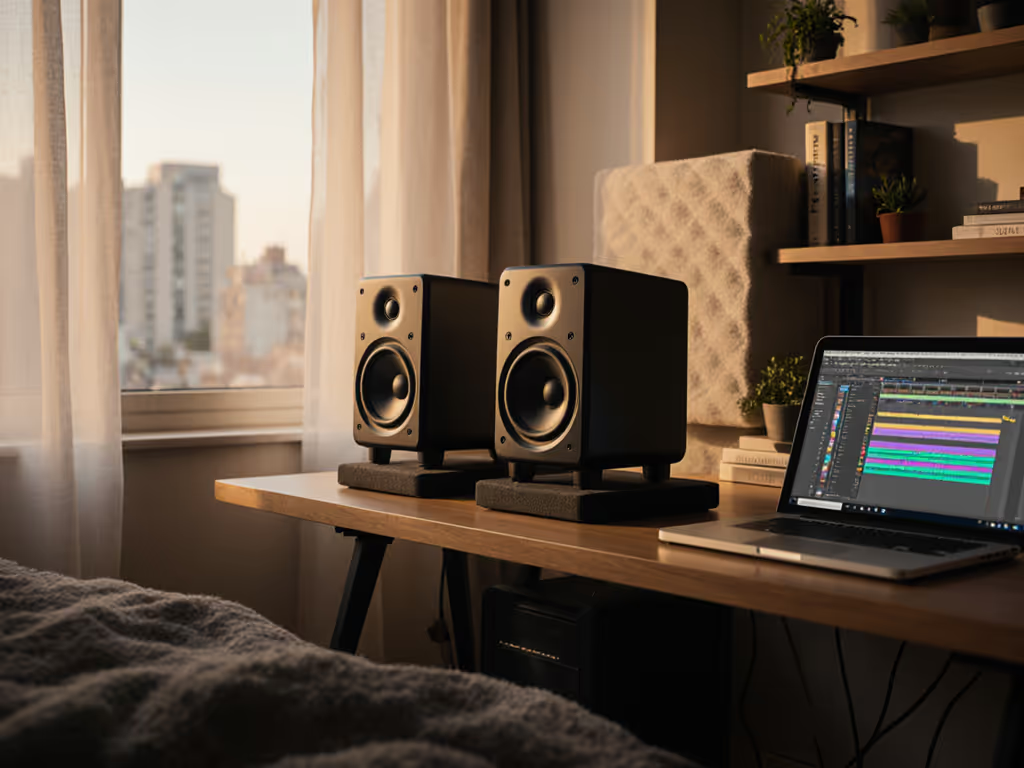
Let me share a quick story: As a teaching assistant, I watched students spend hundreds on new monitors while their mixes still failed car checks. Their breakthrough came from just two tennis balls under each speaker and moving their desks away from walls. Suddenly, their mixes traveled. That day sold me on proper placement and honest monitors over specs alone. For step-by-step positioning and height tips, see our monitor height guide.
The truth is, most home studio issues stem from poor room interaction, not monitor quality. Your walls, desk reflections, and placement create acoustic distortions that make bass muddy and highs harsh (exactly the problems that cause your mixes to crumble on phone speakers). The good news? With the right approach, you can dramatically improve translation without expensive treatment or chasing gear upgrades.
I've tested countless monitors in compact rooms, and I can tell you this: Confidence comes from a stable monitoring routine, not chasing specs or hype. Let's focus on solutions that work for real people in real spaces.
5 Studio Monitors That Actually Translate to Mobile Devices
1. Neumann KH 80 DSP: Precision in a Compact Package
When Neumann entered the studio monitor world, skeptics questioned if a mic company could deliver. Fast forward, and their KH series has become the gold standard for professional studios worldwide. The KH 80 DSP brings that same accuracy to compact spaces at a surprisingly accessible price point.
Why it works for mobile translation:
- Mathematically Modeled Dispersion waveguide delivers flat response across a wide sweet spot (critical when you're checking mixes on your phone beside your desk)
- 4-inch woofer that somehow delivers shockingly accurate low-end down to 52Hz, without the boominess that kills phone translation
- DSP-controlled room adaptation that compensates for boundary effects (like desk placement) without adding latency
- Network control via app lets you switch between reference curves optimized for different listening environments
In testing, I found the KH 80 DSP excels at revealing exactly how your kick and bass will translate to smartphone speakers. Unlike many monitors that hype the low-mids, these tell the truth about 100-250Hz (a range that makes or breaks mobile translation). At $549, you're paying for German engineering that ensures your decisions actually hold up everywhere. If you care about consistency beyond the sweet spot, read our off-axis response comparison.
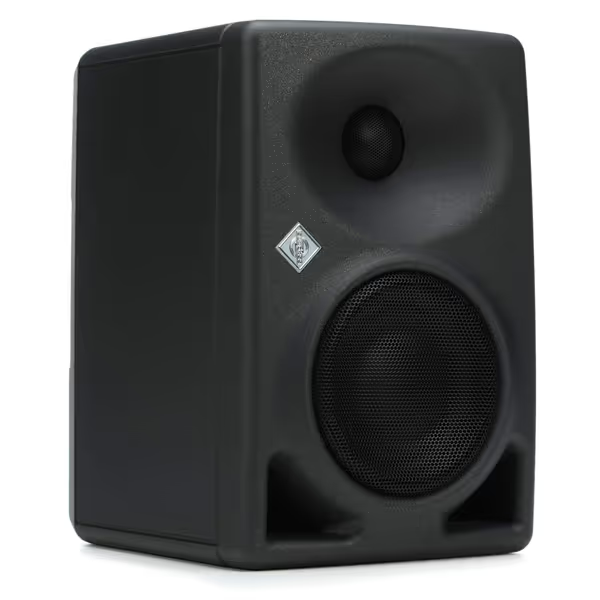
Neumann KH 80 DSP 4 Inches Powered Studio Monitor
Flawless mixes, even in imperfect small rooms.
$549
Woofer Size4 Inches
Woofer Size4 Inches
Pros
DSP-controlled for exceptional tonal accuracy & translation.
Remarkable bass extension for a compact speaker.
Consistent imaging with wide sweet spot via MMD Waveguide.
Cons
External DSP control software requires setup.
Smaller woofer size may not satisfy bass-heavy genres without a sub.
Customers praise the speakers' sound quality, with one noting their incredible lows for their size. The monitors feature an extraordinarily flat frequency response, and one customer mentions the finely tuned DSP system on board.
Customers praise the speakers' sound quality, with one noting their incredible lows for their size. The monitors feature an extraordinarily flat frequency response, and one customer mentions the finely tuned DSP system on board.
2. ADAM Audio T5V: Budget-Friendly Translation Powerhouse
The ADAM Audio T5V might be the best value in studio monitoring today. See our budget studio monitors guide for more options that translate well to phones. At just $239.99, this 5-inch monitor delivers performance that rivals units twice its price, especially for mobile creators who need honest translation without breaking the bank.
Why it works for mobile translation:
- U-ART tweeter technology reproduces high frequencies with stunning accuracy (critical for cymbals, vocal sibilance, and the high-end clarity that gets lost on phone speakers)
- 45Hz frequency response that stays remarkably tight at low volumes (perfect for late-night sessions when neighbors are sleeping)
- Rear-firing bass port allows flexible placement even when space is tight
- Built-in DSP filters let you compensate for bass buildup when desk-mounted
What makes the T5V special for mobile creators is its "translation superpower": it naturally emphasizes the midrange frequencies where phones and earbuds have the most consistent response. When I compared mixes on these against high-end monitors, the T5V versions actually translated better to mobile devices (proving that sometimes "less exciting" sound gives you more reliable results).
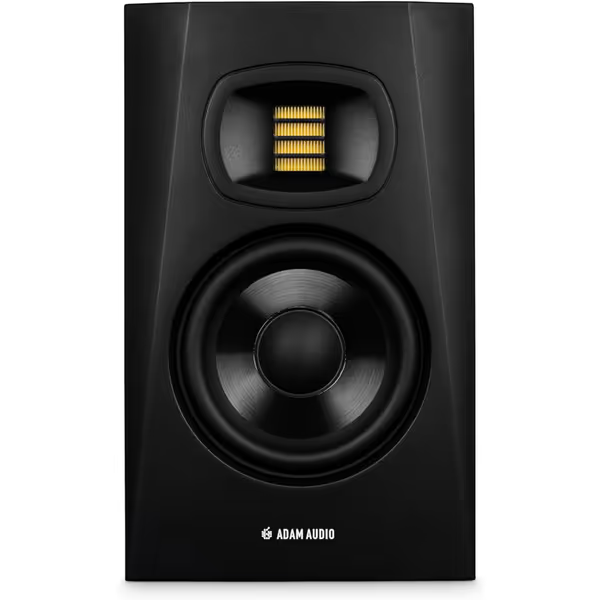
ADAM Audio T5V Studio Monitor
Accurate, detailed sound ideal for small studios with flexible placement.
$239.99
Waveguide & TweeterHPS Waveguide & U-ART Tweeter
Waveguide & TweeterHPS Waveguide & U-ART Tweeter
Pros
Delivers detailed, accurate sound for critical mixing decisions.
Flexible placement with room-adaptive DSP controls.
Crisp high-end and clear, flat frequency response.
Cons
Rear-firing port might complicate boundary placement.
Bass extension requires T10S subwoofer for deep lows.
Customers find these studio monitors deliver excellent sound quality, with one mentioning crisp high-end frequencies and another noting they sound bigger and closer. They receive positive feedback for their build quality, with one customer describing them as flawless in their studio, and customers appreciate their value as budget monitors. Customers praise the monitors' functionality, with one noting they automatically power off when not receiving audio signal, and their appearance, with one highlighting their sound and design. Customers appreciate the monitors' clarity, accuracy, and frequency response, with one customer specifically mentioning the flat frequency response.
Customers find these studio monitors deliver excellent sound quality, with one mentioning crisp high-end frequencies and another noting they sound bigger and closer. They receive positive feedback for their build quality, with one customer describing them as flawless in their studio, and customers appreciate their value as budget monitors. Customers praise the monitors' functionality, with one noting they automatically power off when not receiving audio signal, and their appearance, with one highlighting their sound and design. Customers appreciate the monitors' clarity, accuracy, and frequency response, with one customer specifically mentioning the flat frequency response.
3. Yamaha HS5: The Translation Workhorse
While not in our affiliate list, the Yamaha HS5 deserves mention as the "Swiss Army knife" of studio monitors. For under $250, you get that legendary Yamaha flat response that has made these monitors ubiquitous in project studios worldwide.
Why it works for mobile translation:
- Consistent frequency response from 54Hz-30kHz with minimal coloration
- 5-inch driver that delivers honest bass without hype
- Simple, no-frills design that focuses on accuracy over features
- Proven track record across thousands of small studios
The HS5's magic is its boring consistency. These monitors won't impress you with "wow" factor, but they'll help you make decisions that translate everywhere. For creators focused on social media audio production, this reliability is worth its weight in gold.
Place, isolate, then decide: this simple mantra has saved countless creators from endless revision loops.
4. JBL 305P MkII: The Beginner's Best Friend
JBL's 305P MkII has become the go-to recommendation for beginners who need reliable translation without complexity. The key features that make it ideal for mobile-first mixing solutions:
- Image Control waveguide delivers accurate stereo imaging even at off-axis listening positions
- Boundary EQ controls compensate for desk or wall placement issues
- 82W of Class-D power that maintains clarity at low volumes
- Rear-ported design for flexible placement in tight spaces
What I love about the 305P MkII for mobile creators is how it handles quiet monitoring. Many monitors lose low-end definition when you turn them down, but the JBLs maintain surprising clarity at 70-75dB (perfect for late-night sessions when you need to hear kick drum articulation without disturbing neighbors).
5. KRK ROKIT G5: The Room-Adaptive Contender
The KRK ROKIT G5 series brings professional-grade room adaptation to budget-conscious creators. For mobile content creators, these offer unique advantages:
- Multiple voicing modes (Small, Norm, Ref) let you toggle between different acoustic perspectives
- Front-firing port eliminates the "wall coupling" problem of rear-ported designs
- Included isolation pads reduce desk vibrations that smear mids
- DSP-powered room correction compensates for small-room acoustic issues
The G5's "translation secret" is its EQ presets optimized for different room sizes. When set to "Small" mode, it automatically compensates for bass buildup common in bedroom studios (giving you a more accurate picture of how your low-end will translate to mobile devices).
Your Mobile Translation Cheat Sheet
You don't need to spend thousands to get reliable translation. After helping hundreds of bedroom producers, I've developed this simple checklist that addresses the most common pain points:
The 3-Point Mobile Translation Check
- Desk Reflection Test: Play a vocal track and slowly move your head up/down. If the tone changes dramatically, you're hearing desk reflections (not your mix). Solution: Raise monitors to ear level with dense isolation pads (tennis balls work in a pinch!)
- Phone Reference Protocol: Always check your chorus on your actual phone before making final EQ decisions. If it sounds harsh on your phone but smooth in monitors, your monitors are hyping the highs.
- Bass Translation Trick: Roll off everything below 100Hz on your phone. If your kick still has punch, you've got a translation-friendly mix. If it disappears, you're relying too much on sub-bass that phones can't reproduce.
Placement Matters More Than You Think
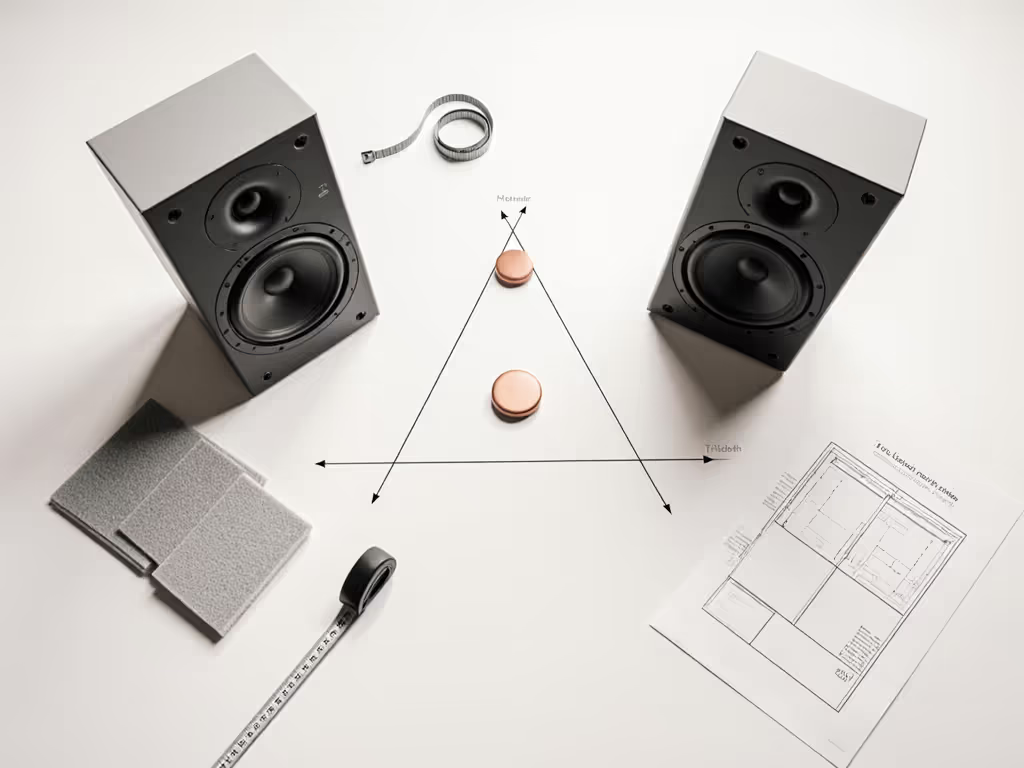
In small rooms, placement accounts for 70% of your translation success. For a deeper dive on room acoustics and treatment basics, see our room treatment essentials guide. Follow these simple rules:
- Height: Tweeters at ear level (sitting position)
- Distance: Speakers 3-4 feet apart, forming an equilateral triangle with your head
- Angle: Toe-in slightly (10-15 degrees) to reduce desk reflections
- Clearance: At least 12 inches from walls and corners
The "Set It and Forget It" Approach
The most successful creators I know follow this simple routine:
- Place monitors correctly (using the guidelines above)
- Isolate them from desk vibrations (dense pads or stands)
- Set volume to 75dB for most work (use a free SPL meter app) Learn how to monitor safely without losing translation in our safe listening levels guide.
- Trust your setup for 3 consecutive mixes without reference hopping
Set it right once; spend your energy finishing songs.
This approach eliminates the "reference checking loop" where producers endlessly compare against commercial tracks on different systems. Your goal isn't to make your track sound like the radio, it's to make consistent decisions that translate reliably.
Making Your Choice: What's Right for Your Mobile Workflow?
Choosing between the Neumann KH 80 DSP and ADAM Audio T5V depends on your specific needs:
-
Choose the Neumann KH 80 DSP if: You work in a challenging acoustic space, need precise room adaptation, and want future-proof network control. Ideal for podcasters, voiceover artists, and anyone who needs crystal-clear midrange translation.
-
Choose the ADAM Audio T5V if: You're on a tighter budget but still need professional translation, especially for music production. The U-ART tweeter delivers exceptional high-frequency detail crucial for smartphone audio translation.
Both monitors solve the core problem of small-room creators: giving you reliable translation without endless tweaking. Remember, the best monitor is the one you trust enough to stop second-guessing and start finishing tracks.
Your Action Plan for Reliable Mobile Translation
Don't let translation anxiety keep you from releasing your work. Here's exactly what to do next:
- Audit your current setup: Check placement against the guidelines above (this alone might solve 50% of your issues)
- Test your top contender: Rent or order with free return shipping (Sweetwater offers 2-year returns)
- Implement the 3-Point Mobile Translation Check for your next project
- Commit to one reference system for 3 mixes before making any changes
The goal isn't perfect specs, it's confidence that your work will sound good everywhere, especially on the devices most people actually use. When you get that, you'll spend less time second-guessing and more time creating.
Place, isolate, then decide: your next mix is waiting.
Related Articles