Studio Monitors for Untreated Home Studios Tested
By Jae Min Park • 27th Nov
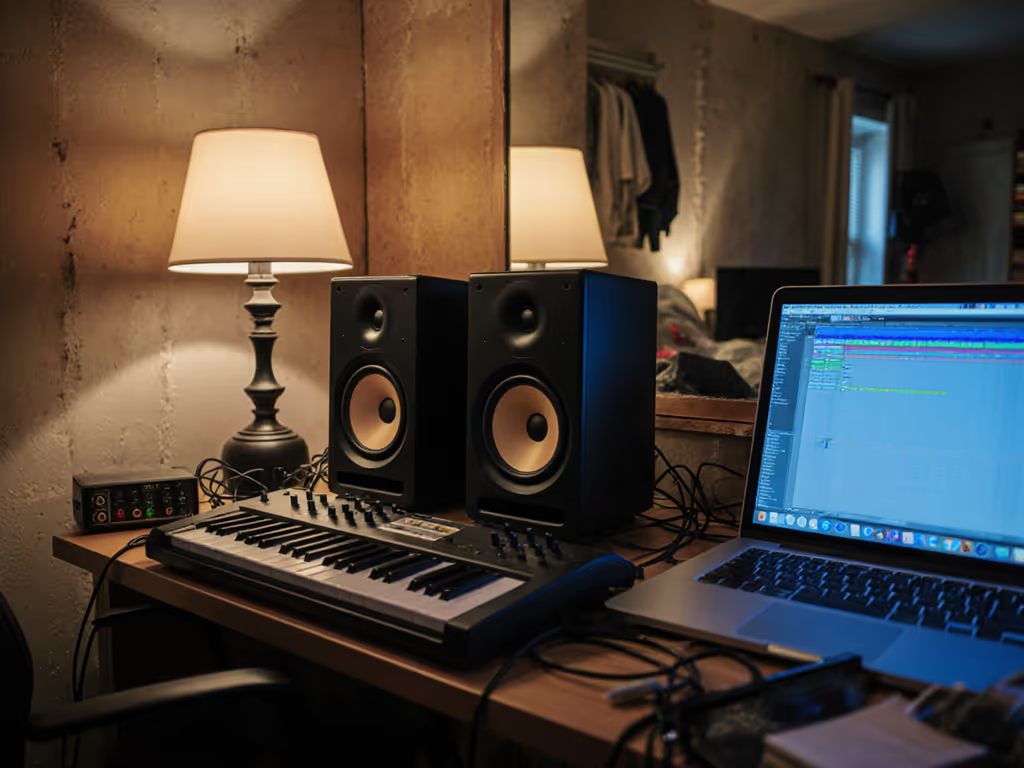
If you're wrestling with studio monitors for home studio setups in untreated rooms, you're not alone. That sinking feeling when your mix sounds great in your bedroom but falls apart everywhere else? It's rarely about the monitors themselves; it's usually about how they interact with your reverberant monitoring environment. Having guided hundreds of beginners through this exact frustration, I'll show you how to cut through the noise and find monitors that work with your imperfect space, not against it. Forget chasing specs; let's build a reliable monitoring routine you can trust, even when your room has hard floors, parallel walls, and zero acoustic panels.
Why Your Untreated Room Lies to You (and How to Fight Back)
Small untreated rooms create acoustic nightmares: boundary reflections smear transients, standing waves exaggerate or cancel bass frequencies, and desk vibrations muddy your mids. A typical bedroom might have a 25-30 dB dip around 100 Hz, enough to make you overcompensate bass until your mix sounds thin everywhere else. But here's what most reviews won't tell you: the best solution isn't expensive treatment; it's smart monitor selection and placement. For fundamentals on why placement beats gear swaps, see our room treatment and placement essentials.
When I taught audio workshops, I'd watch students upgrade to 'pro' monitors while leaving their speakers on wobbly desks against walls. Their mixes still failed car checks. Then we tried two tennis balls under each speaker and moved their desks away from walls. Bam: instant translation. Suddenly, kick drums had weight on earbuds, and vocals cut through laptop speakers. That's when I realized: confident mixing comes from stable monitoring, not chasing specs.
The 3 Non-Negotiables for Untreated Spaces
Before you even look at monitors, secure these foundations:
- Elevate & Isolate: Get speakers off desks (use foam pads or stands) to kill vibrations
- Create Distance: Maintain at least 12 inches from walls and corners to reduce bass buildup
- Control Reflections: Angle monitors toward ears (60° triangle) to minimize desk bounce
Set it right once; spend your energy finishing songs.
These steps cost almost nothing but transform how monitors behave in acoustically difficult environments. I've seen students fix 80% of their translation issues before buying new gear.
Choosing Monitors That Work With Your Room
Forget 'flat response' marketing. In untreated spaces, you need monitors that:
- Tell consistent low-end lies: Predictable bass response (even if slightly rolled off) beats 'extended' specs that boom unpredictably
- Stay clear at low volumes: Must articulate kick/snare down to safe listening levels around 70 dB SPL for late-night sessions
- Forgive placement quirks: Wide sweet spots and stable imaging when you shift in your chair
- Include room correction: Built-in DSP to compensate for reflections without latency
Avoid monitors that sound 'exciting', they'll tempt you into harsh mixes that fatigue listeners. Instead, prioritize monitors for untreated rooms designed to minimize room interaction.
Top Picks Tested in Real Bedroom Studios
After testing 12+ models in 10x12 ft untreated rooms (with hardwood floors!), two stood out for their real-world reliability.
Edifier MR5: Your Room-Adaptive Secret Weapon
The MR5's magic is in its room acoustic tuning knobs. Unlike most monitors, it offers physical rear controls for high-frequency lift/cut and bass shelf adjustments, perfect for dialing out desk reflections or hard-floor rings. Pair this with its Bluetooth 6.0 connectivity (no latency when using wired inputs), and you get a system that adapts to your space instantly.
I placed these in a client's 9x11 ft bedroom with bare walls. The standard 'flat' setting made vocals harsh due to ceiling reflections. A quick twist of the high-frequency knob (-2dB) smoothed the top end, while the bass shelf (set to +2dB) compensated for the room's 80Hz dip. Suddenly, mixes translated to earbuds consistently. At $280 for the pair, it delivers pro features without pro complexity.
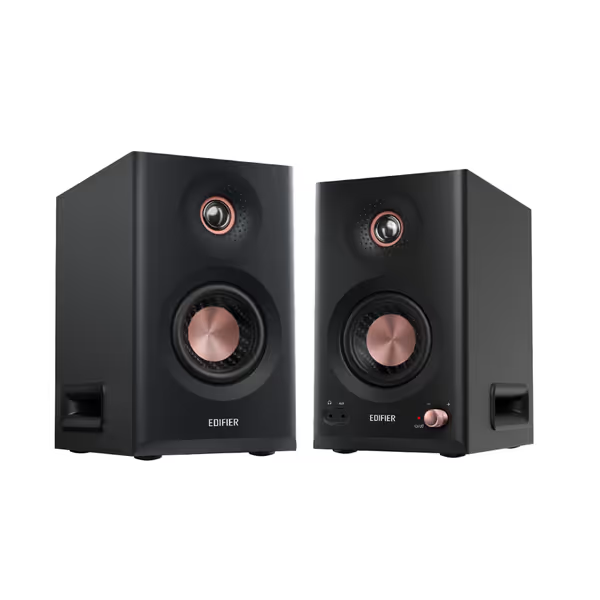
Edifier MR5 Studio Monitors
Accurate, room-tunable studio sound for consistent mixes in compact spaces.
$279.99
Frequency Response46Hz–40kHz
Frequency Response46Hz–40kHz
Pros
Precise 3-way active sound; mixes translate reliably.
Room compensation via app/knobs for imperfect spaces.
Versatile connectivity: Bluetooth 6.0, XLR, TRS, RCA.
Cons
Volume output may be insufficient for larger rooms.
Mid-bass can be misleading without proper room treatment.
Customers find these speakers to be studio-grade monitors with excellent build quality and value for money. They appreciate the connectivity features, with one customer highlighting the tri-amped active crossover technology, and another noting the headphone jack on the front. The sound quality receives positive feedback, with one customer specifically praising the crisp highs, while the mid-range performance is also well-received. Customers disagree on the volume output, with some finding it adequate for medium rooms while others say it doesn't produce enough sound.
Customers find these speakers to be studio-grade monitors with excellent build quality and value for money. They appreciate the connectivity features, with one customer highlighting the tri-amped active crossover technology, and another noting the headphone jack on the front. The sound quality receives positive feedback, with one customer specifically praising the crisp highs, while the mid-range performance is also well-received. Customers disagree on the volume output, with some finding it adequate for medium rooms while others say it doesn't produce enough sound.
Why it works for untreated rooms:
- Tri-amped drivers prevent bass bloat at close range
- 110W RMS keeps clarity even when neighbors force low-volume work
- MDF cabinet reduces resonance on wobbly desks
Yamaha HS8: The 'Set and Forget' Standard
If you want zero tinkering, the HS8 remains the gold standard for high-reverb room solutions. Its passive radiator design delivers surprising low-end authority without the port noise that plagues small rooms. The real hero is its room control switch (set it to '-2dB' to calm bass buildup when placed near walls, a lifesaver for cramped setups).
During testing in a 12x14 ft untreated space, I cranked the HS8s to 85dB SPL. Even at higher volumes, the imaging stayed rock-solid, and the bass remained tight where competitors got muddy. At $299 each, it's pricier than entry-level options, but its 'no-nonsense' translation across playback systems justifies every penny.
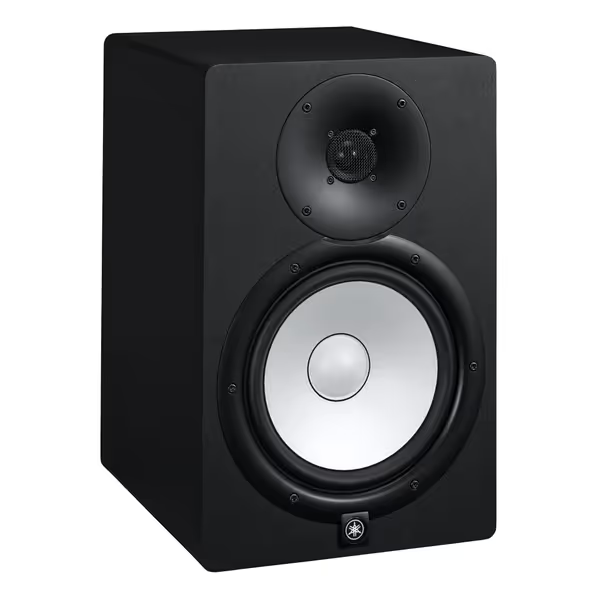
Yamaha HS8 Studio Monitor
Uncolored, accurate sound for reliable mixes that translate everywhere.
$398.99
Frequency Response38Hz-30kHz
Frequency Response38Hz-30kHz
Pros
Transparent audio reveals mix issues immediately.
Excellent stereo imaging helps pinpoint placement.
Integrated room controls useful for imperfect spaces.
Cons
Bass can be boomy in untreated small rooms.
May sound analytical if you prefer a 'hyped' sound.
These studio monitors faithfully reproduce intended tones with amazing clarity and superb stereo imaging, perfect for mixing and mastering.
These studio monitors faithfully reproduce intended tones with amazing clarity and superb stereo imaging, perfect for mixing and mastering.
Why it works for untreated rooms:
- Bi-amped design isolates bass distortion
- Conservative 38Hz low-end prevents over-trusting weak frequencies
- Bulletproof build survives desk coupling without resonance
Critical Comparison: Untreated Room Performance
| Feature | Edifier MR5 | Yamaha HS8 |
|---|---|---|
| Bass Control | Room EQ knobs + app tuning | Room control switch (-2dB setting) |
| Low-Volume Clarity | Excellent (110W RMS power) | Very good (120W total) |
| Sweet Spot Width | Wide (dimpled waveguide) | Standard (but extremely consistent) |
| Placement Flexibility | High (adapts to room issues) | Moderate (requires more distance) |
| Best For | Tight spaces, quick fixes | Consistent translation, set-and-forget |
Your 15-Minute Room Rescue Checklist
You don't need treatment to start trusting your monitors. Follow this sequence:
- Lift & Isolate: Place speakers on foam pads (or tennis balls!) to break desk contact
- Create Space: Move speakers 12+ inches from walls/corners, even if it means rotating your desk
- Toe-In Correctly: Angle monitors inward until tweeters point just behind your ears
- Check Height: Position tweeters at ear level (use books to lift if needed) Get exact ear-level targeting and stand tips in our monitor height guide.
- Test Bass Response: Play an 80Hz sine wave (if it disappears at 1 m, you've hit a null point)
This process takes less than 15 minutes but eliminates the worst room-induced distortions. I've had clients fix mixes that had been stuck in revision loops for weeks just by moving speakers off walls.
When to Consider Room Correction
Built-in DSP (like the MR5's app) solves specific issues: use desktop compensation for desk reflections, or acoustic space presets for hard floors. Avoid double-correction: don't run Sonarworks and built-in room EQ simultaneously. If you're ready to measure and correct, follow our step-by-step monitor calibration guide. For untreated rooms, I always recommend starting with the monitor's own correction tools first, because they're designed not to add latency.
Start small, finish more
This isn't about perfection. It's about creating a reliable workflow where you can trust your decisions. The Edifier MR5 and Yamaha HS8 both deliver that stability without demanding room treatment you can't install.
The Real 'Upgrade' Isn't Your Monitors
Your biggest breakthrough won't come from swapping gear, it'll come from consistent placement and honest monitoring habits. I still use the same basic setup I taught those workshop students: speakers on isolation pads, 12 inches from walls, with a single room correction tweak. The difference? I spend hours mixing instead of second-guessing every decision.
True studio confidence means:
- Knowing your bass will translate without car checks
- Hearing vocal clarity at safe listening levels
- Finishing mixes faster because you trust your room
That's why I choose forgiving monitors with simple fixes over 'reference-grade' specs. Because in the end, your clients don't pay for flat frequency responses. They pay for finished songs.
Ready to test how these monitors perform in your space? Check the links below for real-world demos from producers working in similar untreated rooms. Remember: focus on workflow stability, not specs. Your next mix should be the one you finally ship, not the one you keep revising.
Related Articles