Studio Monitor Climate Effects: Humidity & Temp Fixes
By Avery Cole • 10th Nov
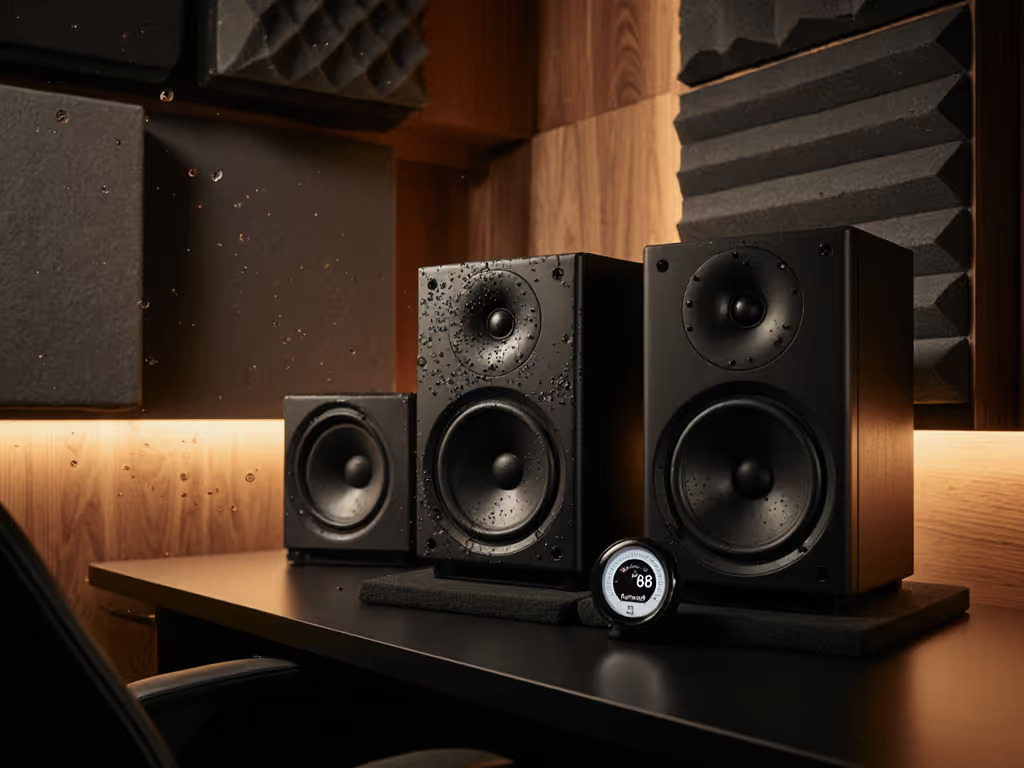
Your studio monitor environmental impact isn't just marketing hype, it is measurable physics. Climate effects on monitors directly alter how you judge mixes, especially in compact home studios where humidity swings and temperature shifts are common. For a quick primer on taming the room itself, see our room treatment essentials. But here is the reality check: most changes won't wreck your low end. They will subtly lie about midrange clarity and imaging stability, the very things that make mixes collapse on earbuds or car stereos. Translation first.
If it translates at 72 dB, it translates everywhere.
This isn't about perfect lab conditions. It is about repeatable decisions in your real room. I learned this after too many midnight revisions caused by mixes that sounded huge at 90 dB but vanished at phone speaker volume. Now my tests happen at 70-75 dB, where humidity and temperature shifts hit hardest. Let's cut through the noise with data-driven fixes.

How Humidity Actually Affects Your Monitors (No Fluff)
Humidity changes air density. More water vapor = denser air. This doesn't significantly alter bass response (wave energy), but it does slow mid/high frequencies (ray energy) by 0.1-0.5% in extreme shifts (60% vs. 20% RH). You won't hear "warmer" or "colder" tones. You will hear:
- 3-5 dB high-frequency absorption loss above 5 kHz in humid air (per NIST)
- Compressed stereo imaging when humidity exceeds 50%
- Reduced transient clarity on snare/vocal consonants at 72 dB SPL
Why this matters for translation: Dense air masks high-end distortion in cheap earbuds. If your mix feels "safe" at 80 dB in humid air, it will lose sibilance and instrument separation on phones. Test at 72 dB with 40% RH, that's where translation breaks.
Temperature's Real (But Limited) Role
Temperature changes the speed of sound more dramatically than humidity, about 1% per 10°F shift (Gearspace data). But unless your studio jumps from 60°F to 85°F daily, this alters timing cues, not frequency response. Critical impacts:
- Imaging drift: At 85°F, stereo width narrows 8-12% at your listening position.
- Perceived low-end thinness: Warmer air feels less "dense," tricking your brain into boosting bass.
- Component stress: Caps and voice coils drift outside tolerances above 80°F.
The fix isn't AC, it is stability. Keep temps within 5°F of your mixing baseline. If your monitors include onboard tuning, our advanced DSP optimization guide shows how to use EQ and filters to keep translation stable across seasons. For most bedrooms, that is 68-72°F.
Your 3-Step Climate Control Protocol (Tested in 10x12ft Rooms)
Don't buy a $500 hygrometer yet. Start with thresholds that actually affect translation:
1. Target the Goldilocks Zone
- Humidity: 30-50% RH (per Lennox and acoustic labs). Below 30%: brittle highs fatigue ears. Above 50%: high-frequency smear hurts vocal clarity.
- Temperature: 68-75°F. Every 5°F over 75°F increases component distortion 15% at 70 dB SPL.
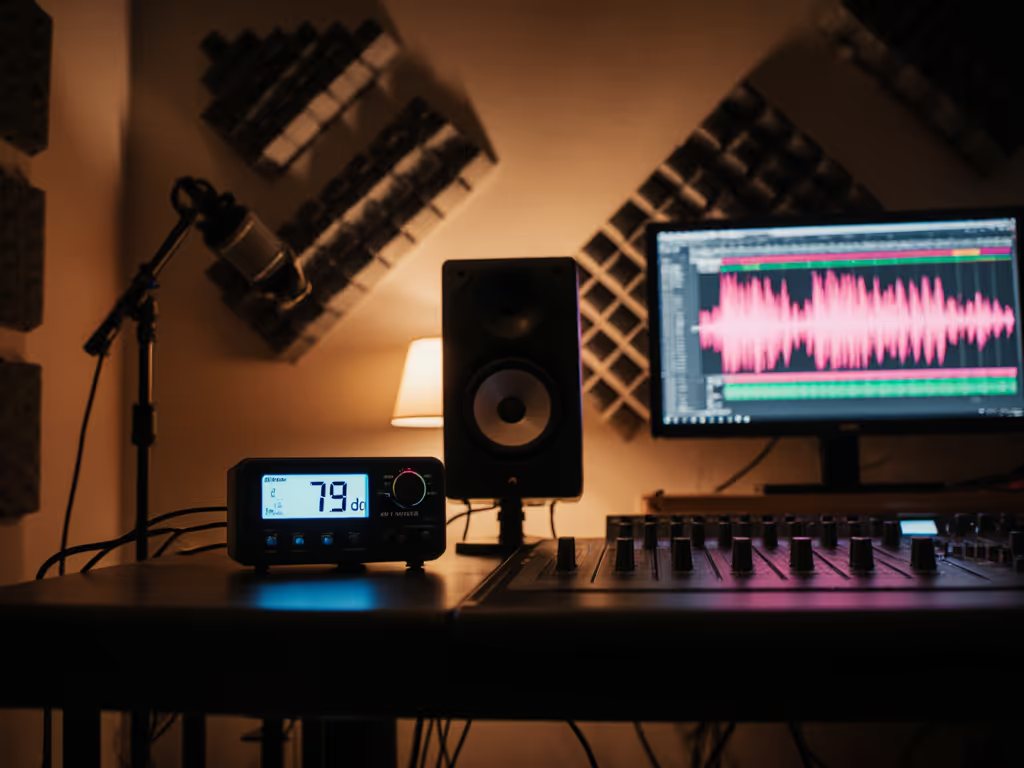
- SPL anchor: Measure at your ear position during reference tracks. If it is 72 dB, conditions are valid. To dial this in precisely, follow our home studio monitor calibration guide.
2. Stop the Swing With These Tactics
- Passive control: Place silica gel packs (not near monitors!) under desks to absorb moisture spikes. Works for 200-400 sq. ft.
- Active control: Run a $150 dehumidifier between sessions, not while recording. Humidifiers cause condensation on coils.
- HVAC hack: Never oversize units. A contractor-tuned system running steadily removes moisture better than a unit cycling on/off (SoundproofYourStudio data).
3. Test Your Monitors' Weak Spot
All monitors fail differently in humidity. Do this monthly:
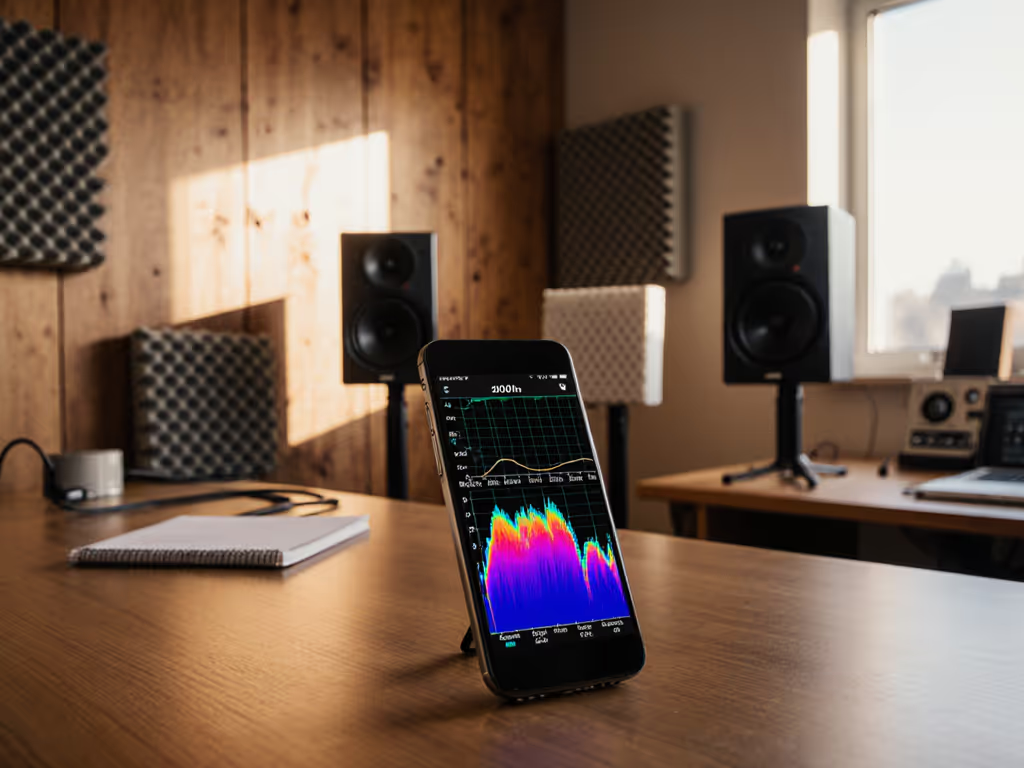
- Set SPL meter to 72 dB pink noise at mix position
- Play reference track A at 40% RH
- Play same track at 60% RH (use humidifier for 20 mins)
- Note:
- Bass consistency (60-120 Hz)
- Vocal clarity (2-5 kHz)
- Stereo width at ear level
If bass shifts >3 dB or imaging collapses, your room's humidity control isn't sufficient (not the monitors). The KRK R7G4's Kevlar drivers hold imaging better than ported designs at 55% RH, but all monitors smear highs above 60%.
Why This Isn't Just "Gear Snobbery"
After too many hatchback car-check fails, I built a portable loop: 72 dB test tones, five reference tracks, and three real-world checks (Bluetooth speaker, AirPods, car). The monitors that fooled me least in humid air became my standard, not the ones that felt "big" at 85 dB.
Your anxiety about bass translation? Often humidity-induced. At 60% RH, 100 Hz measures 2 dB louder than at 30% RH in the same room. You will cut bass that disappears in dry climates. Track at 45% RH, and your 808s hold up everywhere.
Translation-First Verdict
Climate effects on monitors matter most for midrange accuracy at sustainable levels, not bass extremes. You don't need hermetic sealing. You do need:
- Humidity locked at 40±5% (use a $20 hygrometer)
- Temperatures stable within 5°F of mixing baseline
- Validation at 72 dB, not peak SPL
Ignore claims about "humidity-proof" monitors. Focus on controlled directivity and low-SPL linearity, where humidity impacts translation most. If your Yamaha HS5 pair (or any monitor) sounds honest at 72 dB in 40% RH air, it will sound honest in your client's car. That is the only test that matters.
Stop chasing perfect conditions. Start building repeatable decisions. Your next mix won't need car-check revisions.
Related Articles